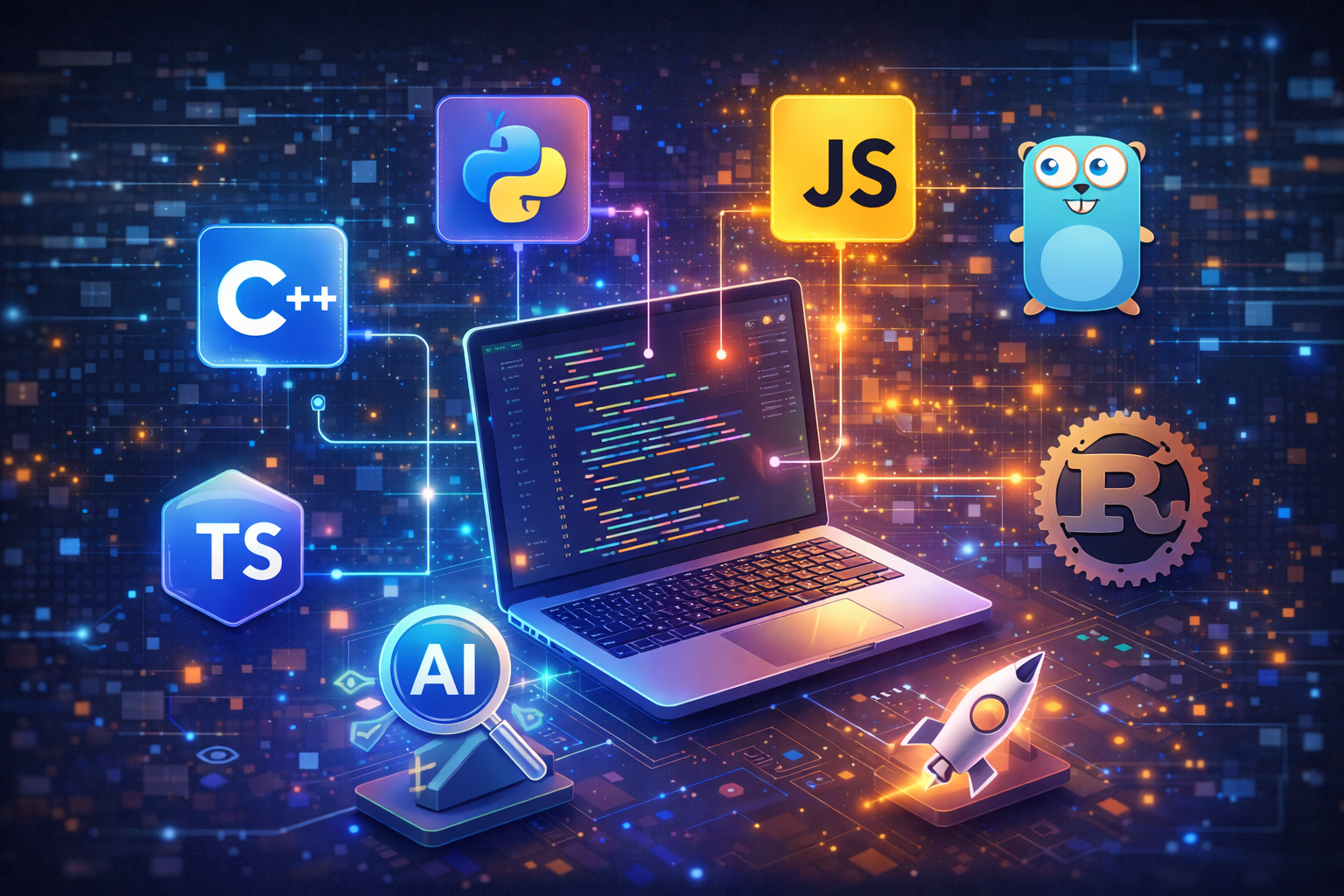
The tech world evolves fast, and programming languages rise and fall in popularity. In 2026, some languages continue to dominate, while others gain ground thanks to new paradigms in development. Whether you're a beginner or a seasoned engineer, this list will help you focus your learning on the most in-demand languages in the job market.
1. Python
- Why it’s hot:
- Ubiquity in AI, machine learning, and data science.
- Massive ecosystem of libraries (NumPy, Pandas, TensorFlow).
- Easy to read, easy to write — ideal for prototyping.
2. JavaScript / TypeScript
- Still king of the web:
- Powering frontends with React, Vue, and Svelte.
- TypeScript adds safety and scalability to JS-heavy apps.
- Universal reach — used for web, mobile (React Native), and even backend (Node.js).
3. Rust
- Rising star in systems programming:
- Memory safety without garbage collection.
- Great for performance-critical apps (blockchain, embedded).
- Backed by big players like Mozilla and Meta.
4. Go (Golang)
- The DevOps favorite:
- Simple syntax, fast compilation.
- Built for scalable backend systems and microservices.
- Used heavily in infrastructure tools (Kubernetes, Docker).
5. Kotlin
- Java alternative that’s clean and modern:
- Official Android dev language.
- Increasingly used on the backend (especially with Spring Boot).
- Interoperable with Java.
Conclusion
The best language to learn in 2026 depends on your goals. Python for data, JavaScript/TypeScript for web, Rust for systems, Go for DevOps, Kotlin for mobile/backend. Choose a path that aligns with your interests — and don’t forget, great developers learn concepts, not just syntax.